Factory and warehouse perimeter security is not merely about “marking boundaries.” It is a strategic investment aimed at preventing unauthorized access, reducing occupational safety risks, maintaining operational order, and elevating the overall security standard of the facility. In this context, panel fencing stands out as one of the most preferred solutions for industrial environments. Thanks to its durability, fast installation, and low maintenance requirements, it is widely used in manufacturing plants, logistics warehouses, bonded warehouses, and organized industrial zones.
In this article, we provide a comprehensive overview of the advantages of using panel fencing for factory and warehouse perimeters, covering correct product selection, technical criteria, installation considerations, and long-term cost benefits.
What Is Panel Fencing and Why Is It Suitable for Industrial Use?
Panel fencing consists of modular fence panels manufactured in standard dimensions, typically made from galvanized steel wire and often reinforced with PVC coating or hot-dip galvanizing to enhance corrosion resistance. Thanks to its panel structure, it offers:
- Fast installation with clean, straight lines
- High rigidity and resistance to bending
- Easy integration with gates, turnstiles, and access control systems
The primary reason panel fencing is preferred for factories and warehouses is its ability to meet both physical security and operational management requirements simultaneously.
10 Key Advantages of Using Panel Fencing in Factories and Warehouses
1) Significantly Improves Security Levels
Panel fencing makes unauthorized access more difficult and prevents uncontrolled movement around the facility. It is especially effective in protecting critical areas such as high-value inventory zones, raw material yards, and loading/unloading areas.
Security levels can be enhanced through:
- Increased panel heights
- Razor wire or barbed wire on top
- Integration with cameras, sensors, and lighting systems
2) Enables Fast Installation with a Modular Structure
In factory and warehouse projects, time directly impacts cost. Due to its modular design, panel fencing minimizes on-site production and waiting time. Installation can be completed quickly in most projects.
This results in:
- Shorter project timelines
- Reduced labor costs
- Minimal disruption to ongoing operations
3) Long Service Life with High Corrosion Resistance
Industrial perimeters are exposed to rain, humidity, UV radiation, dust, chemicals, and temperature fluctuations. Material quality is therefore critical.
High-quality panel fencing systems offer:
- Galvanized coating for corrosion protection
- PVC coating for additional durability and aesthetics
- Reduced maintenance requirements and longer service life
4) Low Maintenance and Operating Costs
Panel fencing is one of the lowest-maintenance perimeter solutions over the long term. Issues such as peeling paint, corrosion, or deformation are minimized with proper coating and quality wire.
In case of damage:
- Only the affected panel needs replacement
- No need to dismantle the entire fence line
This ensures uninterrupted operations.
5) Enhances Facility Discipline and Operational Order
Perimeter fencing is not limited to external security. Within factories and warehouses, panel fencing helps with:
- Separating vehicle and pedestrian routes
- Defining storage areas
- Isolating high-risk zones
- Improving overall site management
As a result, the facility becomes more structured and controllable.
6) Provides a Clean and Corporate Appearance
For facilities that host customer or partner visits, the perimeter fencing system is often the first visible indicator of order and security. Panel fencing offers a professional, organized appearance that enhances corporate perception.
7) Compatible with Access Control Systems
Panel fencing integrates seamlessly with:
- Sliding gates
- Swing gates
- Turnstiles
- License plate recognition systems
- Barrier systems
This compatibility is essential for modern factory and warehouse security infrastructure.
8) Adaptable to Different Ground and Site Conditions
Industrial sites rarely have ideal ground conditions. Concrete floors, compacted soil, sloped terrain, or wall-mounted applications are common. With the right posts and mounting accessories, panel fencing can be adapted to various site requirements.
9) Scalable and Flexible for Project-Based Expansion
As facilities grow, perimeter requirements change. Due to its modular nature, panel fencing can be easily expanded for:
- New warehouse sections
- Extended storage areas
- Additional entry and exit points
10) Cost-Effective in Terms of Total Ownership Cost
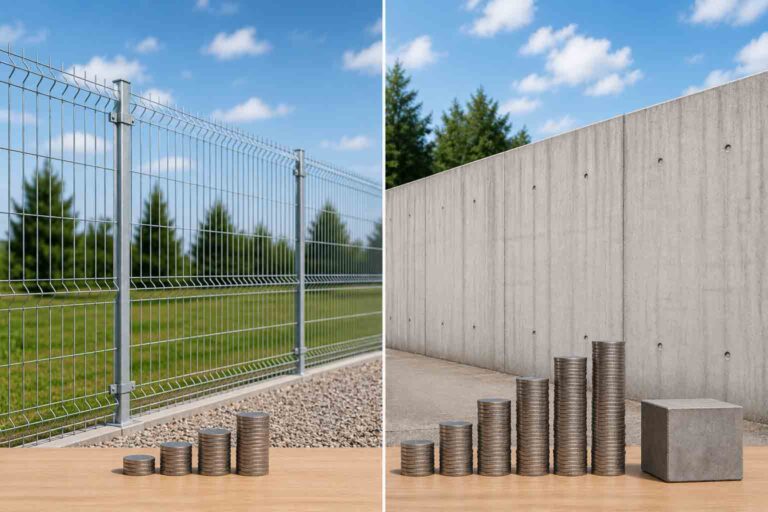
Beyond initial installation costs, panel fencing delivers advantages in durability, low maintenance, fast installation, and easy repairs. From a Total Cost of Ownership (TCO) perspective, it is often more economical than alternative fencing solutions.
Technical Criteria to Consider When Selecting Panel Fencing
Choosing the right panel fencing system directly impacts performance and longevity. Before purchasing, the following criteria should be clearly defined:
Wire Thickness and Mesh Size
- Thicker wire provides higher impact resistance
- Mesh size affects climbing and cutting resistance
Coating Type: Galvanized or PVC?
- Galvanized coating provides core corrosion protection
- PVC coating adds UV resistance, durability, and visual appeal
For industrial environments, galvanized + PVC-coated systems are generally preferred.
Posts and Fixing Components
A fencing system is only as strong as its supporting structure. Consider:
- Post wall thickness
- Anchoring method
- Clamp and fixing component durability
Panel Height and Additional Security Layers
Depending on security requirements, industrial facilities may opt for:
- Increased panel heights
- Razor wire or barbed wire on top
- Integrated surveillance and lighting systems
Which Facilities Benefit Most from Panel Fencing?
Panel fencing is particularly suitable for:
- Organized industrial zones
- Manufacturing plants and factories
- Logistics warehouses and bonded warehouses
- Cold storage facilities
- Raw material and scrap yards
- Energy and fuel facilities
- Ports, customs, and temporary storage areas
Common Mistakes: The Hidden Cost of “Cheap” Panel Fencing
Frequent mistakes when purchasing panel fencing include:
- Choosing based solely on price per meter
- Ignoring coating thickness and wire quality
- Underestimating the importance of posts and fixing systems
- Failing to consider ground and site conditions during installation
These mistakes often lead to:
- Premature corrosion
- Panel deformation
- Loose connections
- Security vulnerabilities
Panel Fencing Is a Long-Term Investment in Industrial Security and Efficiency
In summary, the advantages of using panel fencing for factory and warehouse perimeters extend far beyond basic security. When properly selected and installed, panel fencing delivers long-term benefits in safety, operational efficiency, maintenance savings, corporate image, and total cost control.
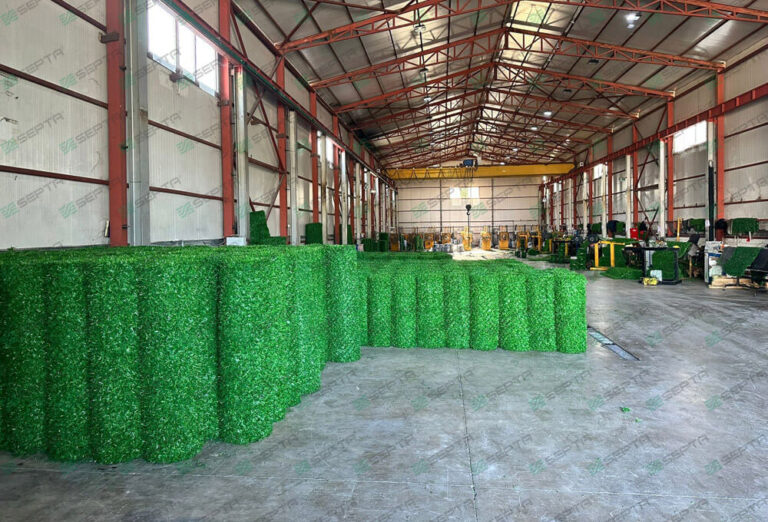
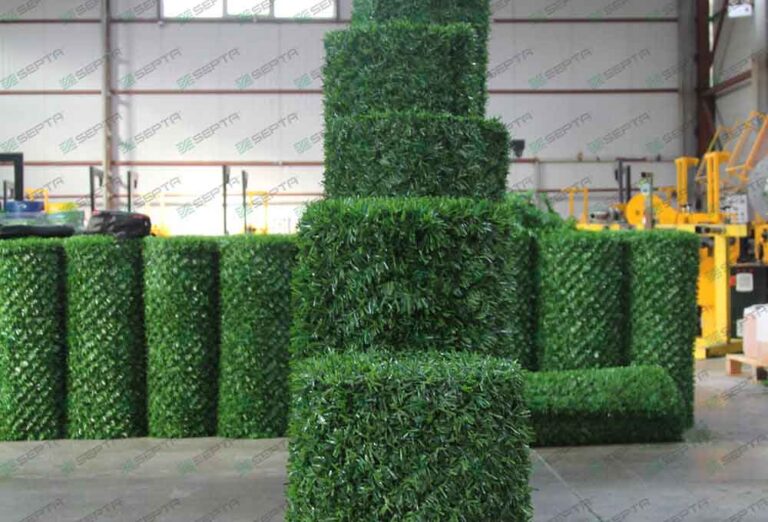
As Septa Fence, we provide project-specific solutions for panel fencing, wire fencing, grass fencing, galvanized wire, and construction wire products. Contact us to receive a tailored quotation based on your site conditions, security requirements, and project scale.