Grass fence prices are among the most researched topics for homeowners and businesses looking for decorative privacy and garden fencing solutions. However, making a decision based solely on the artificial grass fence price per m² can lead to higher long-term costs.
In this comprehensive guide, we will examine:
- The differences between grass fence models
- What to consider when buying wholesale grass fence
- The technical factors that determine durability in garden grass fence systems
- A detailed price/performance analysis
What Is a Grass Fence and Where Is It Used?
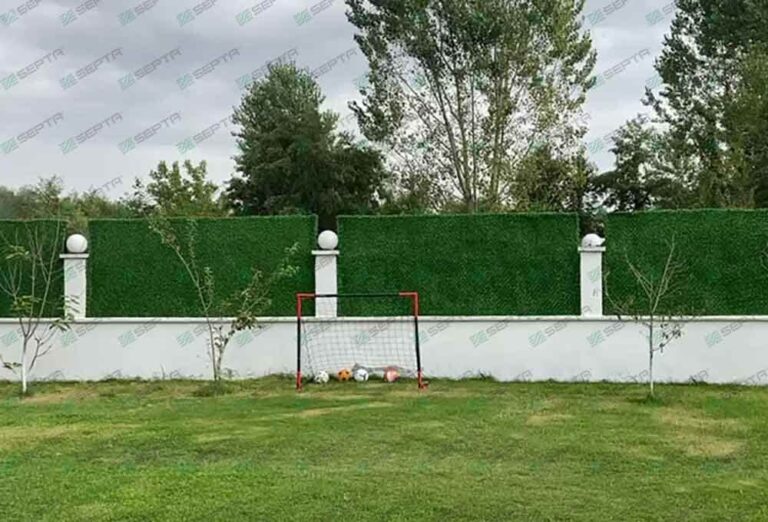
A grass fence is a decorative fencing system produced by integrating UV-resistant artificial grass (PVC or polyethylene) onto galvanized wire mesh. It provides both aesthetic appeal and privacy.
Common application areas include:
- Villa and residential gardens
- Housing complexes and residential projects
- Cafés and restaurant outdoor spaces
- Schools, parks, and social areas
- Balcony and terrace screening
High-search queries include: garden grass fence systems, decorative grass fence prices, and villa grass fence models.
What Determines Grass Fence Prices?
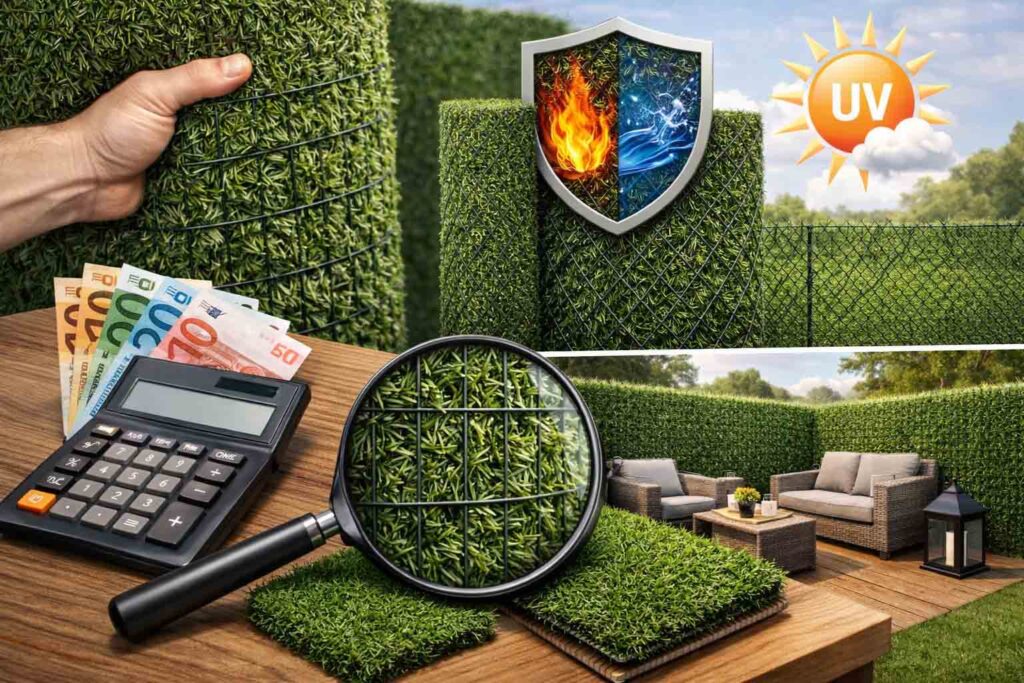
The grass fence price per m² is not fixed. It varies depending on several technical factors:
Wire Thickness and Galvanization
- 2.5 mm – 3.0 mm wire diameter
- Hot-dip galvanized coating
- Corrosion resistance level
Low galvanization quality may lead to early rusting, especially in humid or coastal regions.
Grass Density and Weight (Gram per m²)
- Amount of PVC/PE material used per m²
- Fiber density
- Visual fullness
Lower-density products may appear more affordable but offer reduced privacy and shorter lifespan.
UV Resistance
High-quality artificial grass fences contain UV stabilization additives.
Important questions to ask:
- How many years of UV resistance are guaranteed?
- What is the color fading performance?
- How resistant is the material to yellowing?
Low-cost products may experience noticeable fading within 1–2 years.
Grass Fence Models and Durability Comparison
Standard Model
Suitable for budget-friendly solutions with medium density.
High-Density Model
Provides better privacy and is ideal for long-term projects.
Premium UV-Resistant Model
Recommended for commercial projects and regions with intense sun exposure.
What to Consider When Buying Wholesale Grass Fence
Searches such as “wholesale grass fence prices” are typically made by project-based buyers.
Key factors to evaluate:
- Minimum order quantity
- Volume-based discounts
- Custom production options
- Delivery time
- Warranty coverage
Purchasing directly from a manufacturer often provides better price advantages and stronger quality control.
Cheap vs. High-Quality Grass Fence: A 5-Year Cost Analysis
| Criteria | Low Quality | High Quality |
|---|---|---|
| UV Resistance | 1-2 years | 5+ years |
| Rust Risk | High | Low |
| Color Fading | Fast | Minimal |
| Maintenance Needs | Frequent | Low |
| 5-Year Total Cost | Higher | More Economical |
Although high-quality grass fence systems may require a higher initial investment, they typically offer lower total ownership costs in the long run.
2026 Grass Fence Price Evaluation
Prices vary depending on:
- Wire thickness
- Galvanization quality
- Grass density
- UV additive ratio
- Order volume
Accurate pricing requires project details such as total square meters and fence height.
How to Choose the Right Grass Fence
When buying a grass fence, the decision should not be based on price alone. Wire thickness, galvanization quality, grass density, and UV resistance are critical factors that determine long-term durability.
For garden grass fence systems, aesthetics are important-but durability is equally essential. A high-quality grass fence can maintain its color, resist rust, and require minimal maintenance for many years.
For wholesale grass fence purchases, working directly with a manufacturer provides both cost advantages and technical support tailored to your project.
Ultimately, the right choice should be evaluated based on long-term performance and total cost of ownership rather than short-term price savings.